
Healthcare is responsible for around 5% of global greenhouse gas emissions, and climate change continues to threaten patient health, wellbeing, and the stability of NHS services. In response, teams Maidstone and Tunbridge Wells NHS Trust (MTW) are taking steps to embed more sustainable practice.
Consultant Ophthalmologist and Cataract Lead, Miss Sundas Maqsood, has led a sustainability quality improvement project (QIP) focused on creating meaningful impact through small but deliberate improvements.
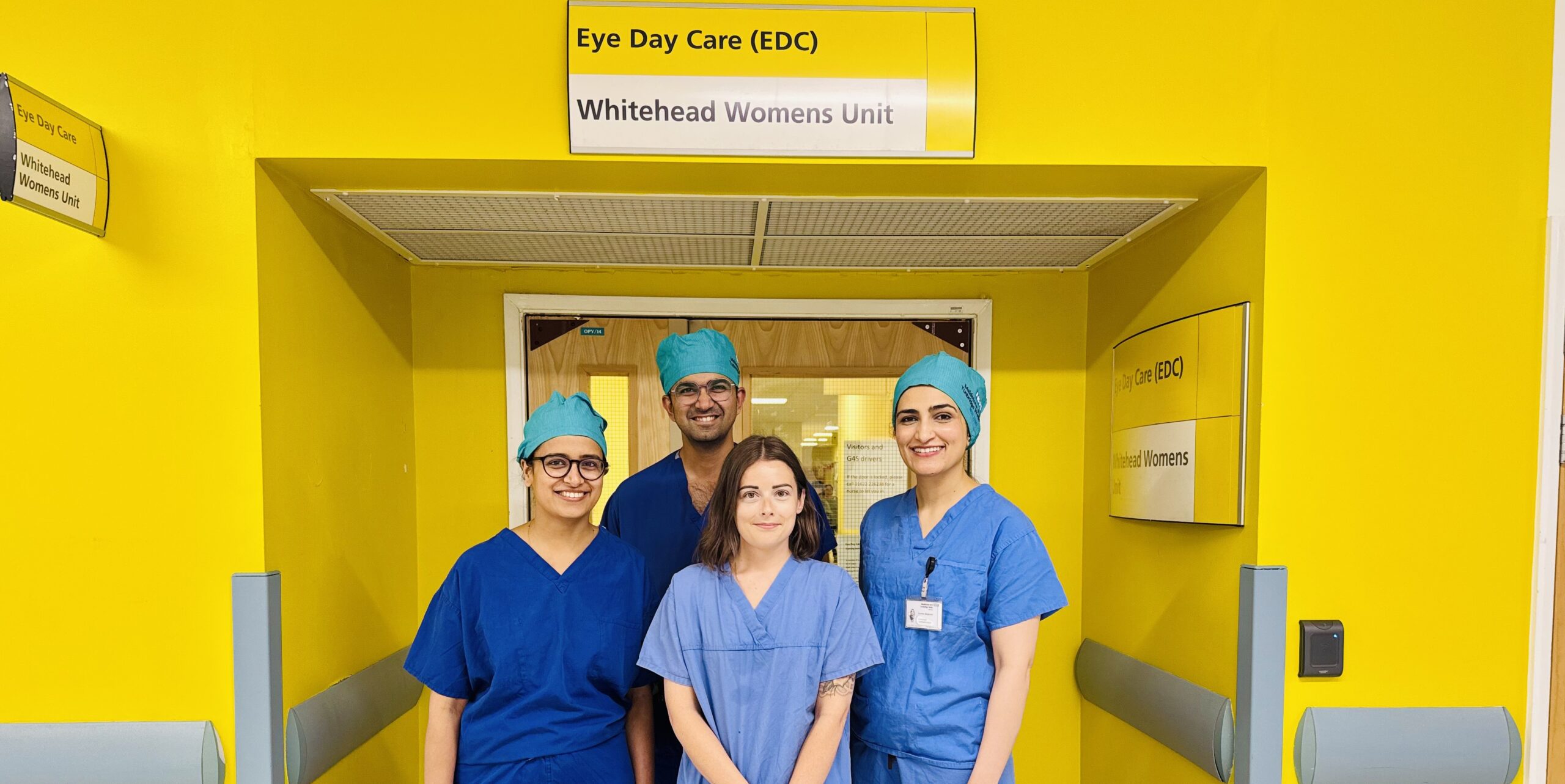
The project team – including Speciality Doctor in Ophthalmology, Dr Aishwarya Amarnath, Resident Doctor in Ophthalmology, Dr Imran Janmohamed, and Speciality Doctor in Anaesthetics Dr Rakshith Prasad, alongside Procurement team Jaye Chapman and Connor Rist – examined the environmental footprint of cataract surgery, the most frequently performed operation worldwide.
With more than 3,000 cataract procedures carried out each year at the trust, small inefficiencies can add up to a large cumulative carbon impact.
A key focus of the project was reviewing the volume of single-use equipment in cataract theatre packs. While a pack contains only 22 items, thousands are used each year.
The team explored ways of moving suitable components safely to reusable alternatives, alongside reviewing anaesthetic choices, which are also known carbon hotspots.
Early analysis suggests shifting appropriate items from disposable to reusable could save nearly two tonnes of CO₂e per year — the equivalent of removing one petrol car from the road for a year.
Although reusable products are not necessarily more expensive, sterilisation processes are the main cost driver. The team is working closely with the Decontamination service to ensure any move toward reusables is safe, feasible and sustainable.
Reusable hemp theatre caps have already been introduced, helping reduce the 92,500 disposable caps used at the trust last year. For each member of staff, switching to a reusable cap reduces their personal carbon footprint by over 84%.
Another early success has been the implementation of a ‘green theatre checklist’ in Ophthalmology theatres. This has helped encourage daily habits that reduce waste, improve resource efficiency, and reinforce the sustainability principles at the heart of the project, in line with the trust’s Green Plan.
Although the work is complex and ongoing, with plans to introduce reusable theatre gowns, the project has already been shortlisted for a Healthcare Financial Management Association Environmental Sustainability Award, recognising the team’s commitment to greener healthcare.