
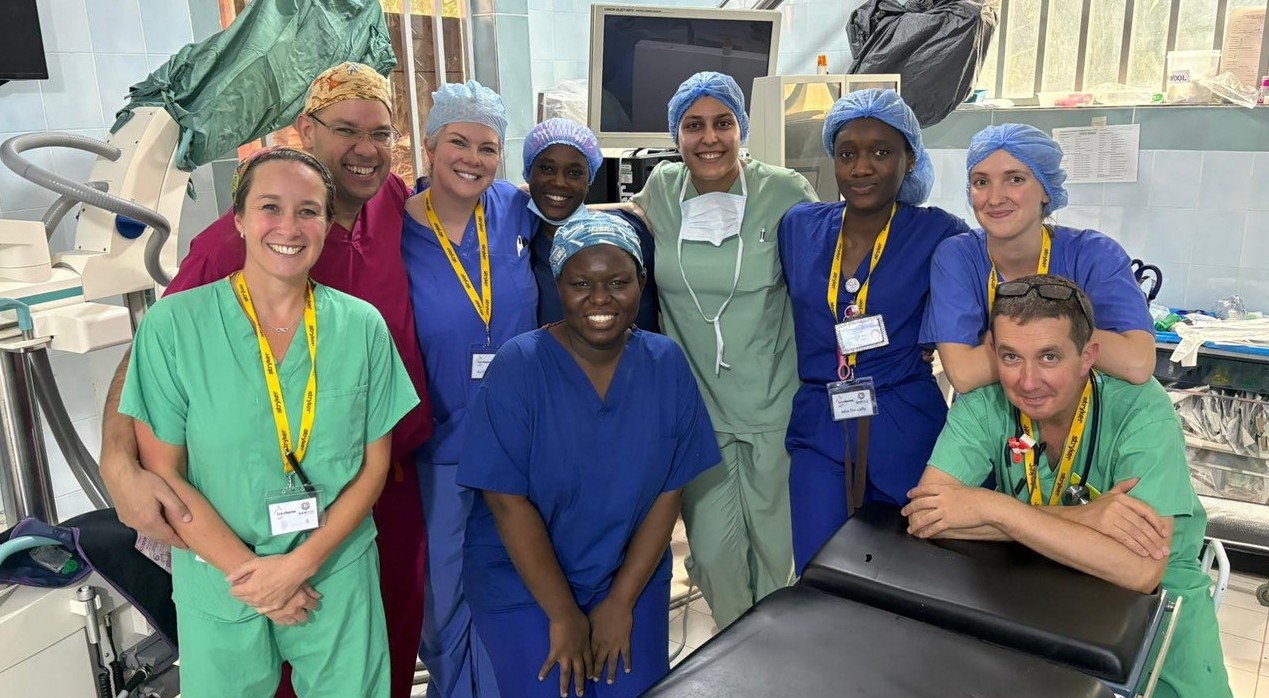
Senior doctors from Maidstone and Tunbridge Wells NHS Trust (MTW) are volunteering with a local hospital in west Africa, helping treat children and adults with bone and joint problems.
The Gambia is mainland Africa’s smallest country, and spends just 3% of GDP on healthcare, meaning a shortage of healthcare professionals.
Because of the limitations of its healthcare system, people can delay seeking help, or turn to treatment from traditional healers, often leading to poor outcomes for patients.
A team of doctors from the UK, including Consultant Paediatric Orthopaedic Surgeon, Jo Dartnell and Consultant Anaesthetist, Andy Taylor from MTW are working with local teams to help change this, and improve the standard of hospital treatment in the country.
A series of outreach trips organised by Gambia-UK medical partnership, GAM MED, founded by the country’s first Gambian orthopaedic consultant, Dr Kebba Marenah, sees surgeons, anaesthetists and radiologists, as well as physiotherapists and nurses, travelling 3,500 miles to the Edward Francis Teaching Hospital in Banjul, the nation’s capital.
Over the course of a week they see more than 200 patients, perform around 70 operations and train over 150 local medical professionals.
Volunteering their time and taking leave from their roles at NHS trusts across the UK, the team see patients and train hospital staff in burn prevention and management, as well as ultrasound, anaesthetics, physiotherapy and nursing education, to give local healthcare professionals new skills to continue caring for the patients once the team has left.
Hundreds of people arrive, often having travelled for days to see the team, who immediately set up a clinic to review the patients. From this clinic they develop their plan for the week, caring for people with complex injuries or treatable childhood conditions, often made more serious because treatment has been delayed.
Fractures which haven’t healed in the correct position can result in significant deformity; open fractures which were not surgically stabilised have led to chronic infection and bone loss; and burns are incredibly common – if not managed correctly the resulting scarring can affect mobility.
As well as seeing patients and supporting local healthcare professionals to improve their skills and gain experience, they work with authorities in Gambia to help improve the quality of healthcare in the country. As a result of the team’s sustained visits and involvement, the hospital now has three operating theatres, an excellent sterilisation service, theatre lights and an x-ray machine.
UK organisations have donated decommissioned equipment, which is shipped out for the team to use during their visits, and hospital staff are trained so they can continue using it once the UK medical team have left. The team take a large number of crutches, and physiotherapists help see patients post-operatively and teach the local team about effective rehabilitation to ensure patients regain as much mobility as possible.
The weeks spent in The Gambia are not without their challenges, from the complex patients the team help care for, to the limited infrastructure which can affect hospital operations.
Consultant Paediatric Orthopaedic Surgeon, Jo Dartnell describes operating during power cuts and working in operating theatres with no air conditioning in 33-degree temperatures, while wearing a lead coat to protect against x-ray radiation.
The GAM MED team teach Gambian anaesthetists regional anaesthetic techniques so they can avoid giving a general anaesthetic where possible – which is safer for patients and leads to less pain after the operation – and focus on the early detection and management of emergencies and advanced life support in the event of a cardiac arrest.
Consultant Anaesthetist, Andy Taylor praised the ability of the healthcare team to “think on their feet”, saying: “You really have to manage with what you’ve got and be adaptable in your thought process”.
Jo Dartnell added: “There is a lack of awareness in the general public about how to prevent infection, so it’s a massive issue in the patients we see, often causing significant damage. When they present at hospital, things can be far more advanced than we might see at home. People may have delayed seeking medical treatment because they didn’t realise we could help them, or they are unfamiliar with hospital care and frightened.”
However, she paid tribute to the work of the Edward Francis Hospital team, saying “We absolutely could not do this without the local professional staff. It’s such an emotional and physical experience, and takes every ounce of energy you have; you need the best possible team around you, and people you can trust.”